


Unlocking AI's Potential in Radio: Opportunities, Challenges, and the Path Forward.
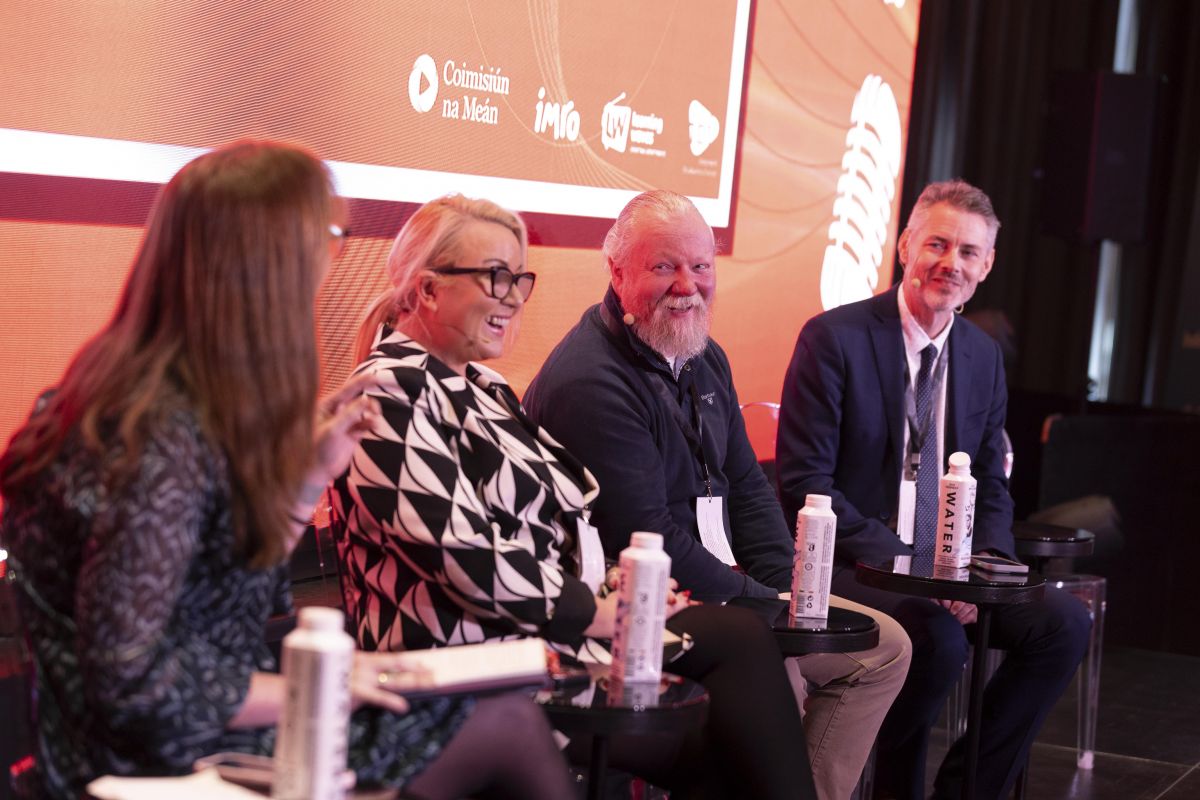
Artificial Intelligence (AI) is quickly reshaping industries across the globe, and radio is no exception. From enhancing productivity and streamlining content creation to enabling more personalised experiences for listeners, AI presents a range of opportunities. Yet, with these advancements come critical ethical and practical questions - particularly about the balance between human creativity and automation, the authenticity of AI-generated content, and the evolving role of on-air talent. At Radio Days Ireland 2025, a panel featuring Glen Mulcahy of Titanium Media, Joanne Sweeney of the Digital Training Institute, and James Cridland of PodNews explored these themes, delving into both the immense potential and challenges that AI brings to the radio world. The panel was moderated by Jess Kelly, Tech Correspondent, Newstalk.
The Dual Nature of AI in Radio: Generative vs. Transformative
James Cridland set the stage by discussing the distinction between two forms of AI: generative and transformative. Generative AI is what most people think of when they consider AI's creative abilities. It can generate content from scratch, whether it's a news story, a jingle, or even a song. For radio, this could mean AI helping create promotional materials or even entire segments of content, enabling stations to produce more with fewer resources.
On the other hand, transformative AI enhances existing content. This is where AI shines in practical applications like audio editing and improving the quality of recorded materials. Cridland pointed to Adobe's free tool that removes background noise from recordings, transforming a noisy, outdoor interview into something that sounds as if it were recorded in a studio. He also highlighted tools like VocalRemover.org, which can strip vocals from a track, allowing radio producers to create clean, music-only promos.
For Cridland, transformative AI is the most valuable for radio right now, as it enables stations to work more efficiently and with higher quality output. Yet, he also cautioned that generative AI, while useful in some contexts, poses a challenge to the authenticity of content. For example, AI can create written content that feels overly polished but lacks the nuance of human-written pieces.
The AI Skepticism: A Divide in Adoption
Despite the clear benefits of AI, there’s a divide in the radio industry between those embracing technology and those who remain skeptical. Cridland himself shared his experience with the Adobe voice enhancement tool, which, while powerful, often makes voices sound inauthentic - a key issue for radio professionals who prioritise natural, human-sounding content.
“I can tell a mile away when someone has used this tool,” Cridland remarked, explaining that in the world of talk radio, where authenticity is paramount, AI-generated audio simply doesn’t have the same emotional connection as a human voice.
But even with this skepticism, AI tools are improving quickly. As Cridland noted, distinguishing AI-generated content from human-generated content is becoming harder, whether it’s through written press releases or voice clones. However, he also offered a helpful tip for those using AI voice enhancement tools: mixing the AI-enhanced voice with the original voice can often yield a more natural result.
Despite these advancements, Cridland and the panellists agreed that there’s a fine line between using AI for efficiency and sacrificing authenticity. AI can’t replace the emotional resonance of human voices, which is why it’s essential for radio stations to carefully consider when and how they use AI.
AI's Impact on Radio: Productivity and Human Connection
Joanne Sweeney, a digital training expert, emphasised the importance of embracing AI to boost productivity without losing the human touch that makes radio unique. “We are living through the productivity frontier,” Sweeney said. “Everyone in radio is juggling multiple roles, and every time you’re asked to innovate, the response is often, ‘We don’t have time.’ This is where AI comes in.”
For radio stations, AI offers an opportunity to automate mundane, time-consuming tasks like scheduling, transcribing interviews, or summarising emails. This allows staff to focus on more creative and high-impact work. However, Sweeney also pointed out that AI should never replace the human connection that radio stations have with their audiences. “AI has no soul,” she said, highlighting that while AI-generated content like music can be entertaining, it will never replace the emotional connection that a human voice brings to the airwaves.
Sweeney also brought up a fascinating example of AI-generated music from the band “Girly Girl,” an entirely AI-created girl band that’s gained millions of views on Spotify. While AI-generated content like this is an interesting technological development, it raises the question: Can AI truly capture the emotions and cultural essence of a human experience, or does it miss the mark?
For radio, the key to remaining relevant lies in maintaining that authentic human connection, which is something AI simply can’t replicate. But when used wisely, AI can serve as a tool to enhance productivity, improve quality, and free up valuable time for creative work.
Navigating the Ethical and Legal Implications of AI
As AI continues to make inroads into radio, Jess Kelly raised questions about the ethical and legal implications of its use have and suggeseted to the panel that these issues have become more pressing. One concern raised by the panel was the use of AI to clone voices, particularly in instances where talent might not be available. Cridland shared an example from Southern Cross Austereo in Australia, where AI-cloned voices of radio talent are used to read localised traffic updates - a job that would be difficult to fill with human talent in 40 different stations.
“Cloning voices for specific, small tasks like weather reports or traffic updates is an interesting application,” Cridland said. “It can be useful for creating brand awareness and maintaining familiarity with listeners, but it raises questions about voice ownership.” What happens if a station uses AI to clone a voice and then that voice is no longer available? Can the station continue to broadcast using the cloned voice, or does that create issues around ownership and compensation?
This is where the ethical and legal lines start to blur. While it may be practical to use AI clones for specific tasks, it also raises concerns about whether AI-generated voices should be considered an intellectual property asset. This is something that unions and radio stations are starting to address in contracts, ensuring that on-air talent’s voices are protected in the age of AI.
Policy and Best Practices: Securing AI Usage
A critical aspect of AI adoption in radio is ensuring that stations have clear policies around its use, particularly when it comes to protecting sensitive information. As discussed by the panel, the risk of data breaches and intellectual property theft is heightened when AI tools are used improperly. AI platforms, especially free ones, often gather and use uploaded data to improve their models, raising concerns about copyright, proprietary information, and data protection.
“Do we use paid tools? Because if you use paid tools, you can lock down the models using your information to train themselves,” explained Cridland. “And that’s where people are really worried about copyright and confidential information.” For this reason, many stations are taking a “test and learn” approach, experimenting with AI tools but being mindful of the potential risks. Developing strong policies and conducting research to identify the right tools for their specific needs is essential.
Glenn Mulcahy also highlighted the importance of cybersecurity. Without clear guidelines, staff members might upload sensitive data to AI platforms for tasks like summarizing emails or creating content, unaware of the data protection risks they may be exposing. “Having a stance on cybersecurity is crucial to prevent these breaches,” Mulcahy said.
Finding the right AI tools requires research and due diligence, especially when many platforms promise more than they can deliver. Small, local stations may face challenges in dedicating resources to this research, but there are communities and networks, like Radio Days Europe, where stations can collaborate and learn from each other’s experiences and best practices.
Transparency in AI Use: To Disclose or Not to Disclose?
As AI becomes more integrated into radio workflows, the issue of transparency arises. Should radio stations disclose when they use AI-generated content? The panellists were unanimous in agreeing that transparency is key to maintaining trust. “Never hide it,” said Sweeney, emphasising that if a station uses AI, it should be clear about it. If AI-generated content is hidden and later discovered, it could lead to severe damage to the station's credibility and brand.
Some stations, particularly in broadcasting, have adopted best practices of disclosing when AI tools have been used in creating content. This often involves editorial approval before publishing AI-generated material, ensuring that there’s a clear process and guidelines for when AI is used. For instance, some organisations even go as far as to name the tools they used to generate content.
That said, when it comes to generating entirely fake content - whether it's a fabricated news story or an AI-generated interview - trust can quickly be lost if it’s not disclosed. “If you create a piece of content that says something that is completely artificially generated, and the audience discovers that you’ve done that without saying it’s AI, that’s game over for the brand,” Cridland warned.
The Trust Factor: Authenticity vs. AI in Content Creation
As the panelists' noted, one of the critical areas where AI could potentially cause issues in radio is when it comes to the authenticity of content, particularly when that content is intended to express an opinion or be perceived as emotionally driven. AI's "hallucination" problem, where it generates information that may sound plausible but is factually incorrect is a key concern here.
“If the Minister for Housing were to give a really impassioned speech about homelessness, and it turns out that a speechwriter used ChatGPT to write it, there would be an absolute outrage," explained Cridland. "It’s the authentic connection that people value. They want to hear real opinions, not AI-generated ones.”
This sentiment was echoed by Mulcahy, who noted that AI may be useful behind the scenes for research or even drafting ideas, but when it comes to content that will go out to the public as an opinion or passionate commentary, authenticity and human connection cannot be sacrificed.
Drawing the Line: From Simple Tools to Full Automation
The issue of where to draw the line between acceptable use of AI tools and overreliance on them was a key topic of discussion. Simple tools like spellcheckers and grammar tools such as Grammarly have been in use for years, but more complex applications like ChatGPT for generating content or refining drafts are a different story.
“Where do we draw the line?” asked one attendee. “If you’re using something like Grammarly to polish your article, that’s one thing. But what if you drop your article into ChatGPT and ask it to refine it further?”
The panellists agreed that it’s essential to maintain a distinction between personal and public use cases. Personal use of AI tools, like polishing an email or organising thoughts, is different from using AI to generate public-facing content. This is where having clear policies and guidelines becomes crucial.
“It’s about sandboxing and quantifying the process,” Mulcahy said. “When you use tools like ChatGPT for writing or research, it’s important that you can examine the output for bias, accuracy, and authenticity. If you’re publishing it, you need to stand by it.”