

Steven Reiner: Why Radio Matters More Than Ever in the Age of Misinformation.
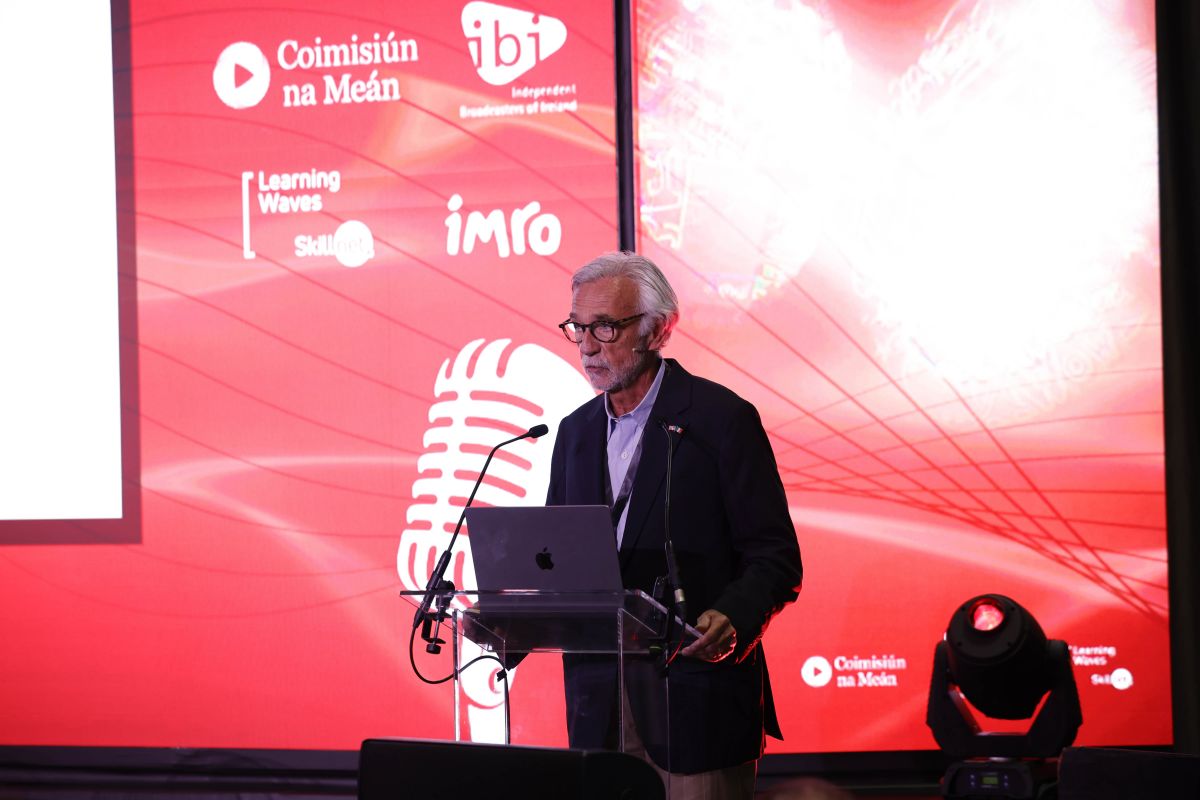
At this year’s Radio Days, we had the privilege of welcoming Steven Reiner - Emmy Award-winning producer, former 60 Minutes producer, and Emeritus Associate Professor of Journalism at Stony Brook University. With an extensive career spanning CBS, ABC, NBC, and NPR, Reiner brought powerful insights into the role of radio and audio journalism in countering misinformation in today’s fast-moving, digitally driven media landscape.
From Gutenberg to Zuckerberg: A Tale of Two Revolutions
Reiner opened his talk by comparing Johannes Gutenberg, who introduced the printing press, with Mark Zuckerberg, founder of Facebook. Despite being separated by 500 years, both revolutionized the way information is shared.
Gutenberg gave rise to mass communication through the printing press and Zuckerberg accelerated it with social media. One changed religion, culture, and knowledge. The other changed how billions interact and consume information daily.
But the consequences of this acceleration - particularly through social media are far-reaching, and not all positive. As Reiner noted, “Social media does provide a toxic stew for our brains.”
The Emotional Engine Behind Disinformation
One key insight Reiner shared was the neurological reality that humans process and accept information emotionally before intellectually. We’re hardwired to respond emotionally to information. This makes us highly susceptible to misinformation that aligns with our beliefs - a phenomenon known as confirmation bias. It’s also why disinformation spreads faster and more convincingly than the truth.
Social media's ability to micro-target and create ideological echo chambers has led to a more divided, misinformed public. And it's not just online—we see this behaviour reflected in our TV viewing habits, too.
Reiner quoted the 18th-century satirist Jonathan Swift: “Falsehood flies, and the truth comes limping after it.”
Why Radio Still Matters
Despite the rise of social media and the algorithmic chaos of digital news feeds, Reiner believes radio is uniquely positioned to rebuild trust. Radio has something social media doesn't: intimacy. A voice in your ear. A relationship. A trusted guide.
Its spoken-word format, trusted personalities, and deep listener engagement make radio one of the most powerful tools we must counter misinformation - especially in a media environment where trust in institutions is at an all-time low, particularly in the U.S.
Radio can amplify credible voices, foster nuanced discussion, and cut through the noise of the internet. And with careful programming, podcasting can help, too if it shifts from opinion and entertainment toward responsible journalism.
Podcasting: Growth, Influence, and Challenges
Reiner also addressed podcasting’s explosive growth, particularly among younger audiences. While still smaller than traditional radio in terms of daily reach, podcasting is expanding rapidly, especially in the U.S., where over 116 million people now tune into NPR podcasts monthly.
However, he cautioned that while podcasting is powerful, it’s often used more for entertainment and inspiration than for news. According to Pew Research, only 20% of listeners use podcasts to stay informed on current events. While podcasting has deep reach and influence, it lacks the journalistic infrastructure of traditional media and rarely serves as comprehensive sources of verified information.
Fighting Disinformation: Education Over Refutation
There’s no shortage of organizations and foundations fighting disinformation. But here’s the tough truth - most strategies haven’t proven effective. The largest study on this topic, 33,000 participants showed only a 5–10% improvement in critical thinking.
Reiner’s perspective on disinformation is clear, facts alone aren’t enough. Flooding platforms with corrections doesn’t work. What works is education, teaching critical thinking and media literacy from a young age.
At Stony Brook University, he helped pioneer the Centre for News Literacy, which aims to equip students with the tools to assess sources, understand verification, and detect manipulation.
Journalism, Trust, and the Future
In the U.S., 70% of people say they don’t trust the media, a staggering statistic. And yet, trust can be rebuilt with transparency, engagement, and a willingness to demystify journalism.
Over half of all adults receive their news from social media that comes from traditional news sources because places like the New York Times, the Washington Post or NBC News will post their material to social media sites.
Steven urged journalists to:
- Involve the public in the reporting process
- Explain their methods and decisions
- Be passionate but fair
- Embrace the spirit, not just the rules, of objectivity
Finally, as we look to recruit the next generation of journalists, we must appeal to their curiosity and sense of purpose, not just paychecks. Journalism isn’t just a job - it’s a calling to seek truth and tell stories that matter.
Final Word
In an age where misinformation spreads faster than ever, and trust in media is under siege, radio and audio journalism more broadly can play a pivotal role in restoring clarity, credibility, and connection.
For Irish commercial radio professionals, Reiner’s message is both a challenge and an opportunity - lean into the power of voice, nurture the next generation of journalists, and continue to serve as a trusted source in an increasingly fragmented media world.